Container self storage.
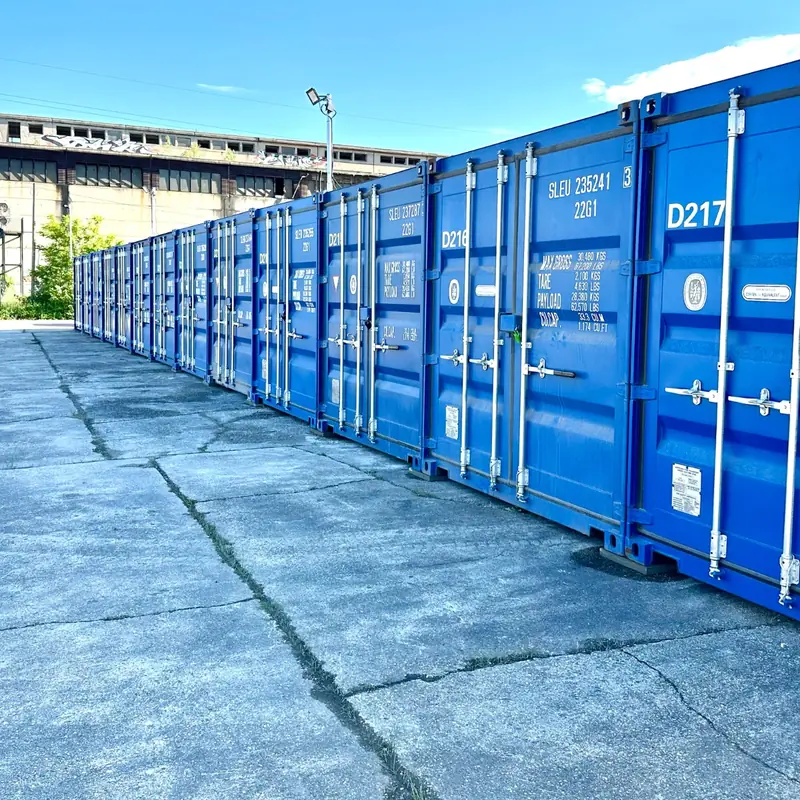
Storage containers on open land, with drive-up access and digital booking. The fastest route from an empty site to an operating facility.
From site to facility in five steps.
Assess the site
Catchment area, access, visibility, competition and planning law.
Obtain permits
Building application for the container facility, including access road, lighting and fencing.
Prepare the land
Paved surface, drainage, fence, gate, power and CCTV.
Place the containers
Delivery by lorry, alignment, numbering and locks, often within a few days.
Rent out digitally
Online booking, digital contract, access via app or code.
Why container parks are growing.
A container park significantly lowers the barrier to entering the market. But success is not automatic.
Strengths
- Lower capital requirement per unit
- Fast launch
- Expansion in step with demand
- Direct vehicle access, ideal for businesses
- Assets are mobile and reusable
Limitations
- More land needed per m² of storage
- No climate control
- Condensation: ventilation is essential
- Appearance & neighbours need consideration
- A permit is still required
Permits
Storage containers may be mobile, but a permanently installed container facility is generally classed as a structure and requires planning permission. Commercial and industrial zones are the most suitable locations. The application typically covers the type of use, parking, access and fire brigade requirements, lighting, fencing and drainage.
Land requirements
Besides the containers themselves, you need driving aisles where vans can manoeuvre and doors can open. As a rough rule of thumb, only around 40–50% of the site is actually occupied by containers. A 4,000 m² site therefore has room for approximately 100–130 storage containers, depending on its shape and whether units are stacked.
Economics
The calculation is relatively transparent: number of storage containers × rent × occupancy gives you revenue. From this you deduct ground rent, marketing, software, insurance, maintenance and administration. Because no building is constructed, the investment per unit is considerably lower than for indoor concepts.
Try it yourself in the calculator →
What tenants should know
| Storage container | Indoor unit | |
|---|---|---|
| Access | Drive right up to the door | Via loading bay, corridor and lift |
| Size | Usually 7–30 m², ideal for furniture & materials | From approx. 1 m², ideal for boxes |
| Climate | Ventilated, not heated | Usually temperature-controlled |
| Suitable for | Household goods, tools, tyres, business stock | Files, clothing, sensitive items |
Looking for a storage container? You can book storage containers online with CoStore, the initiator of this platform. You will find other operators in the directory.
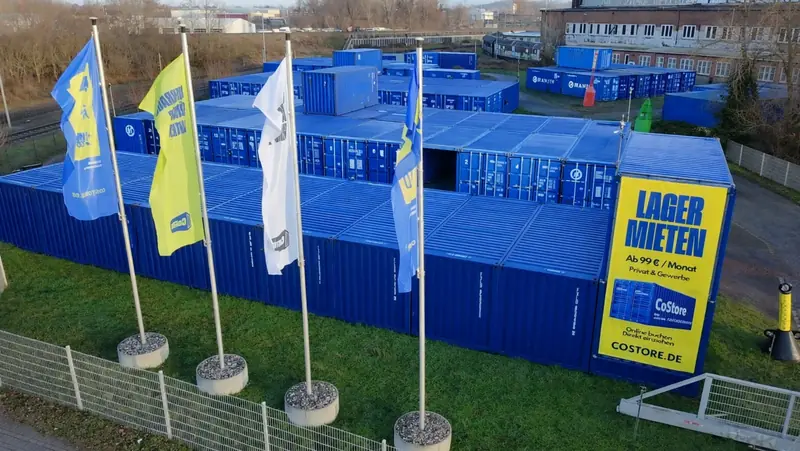
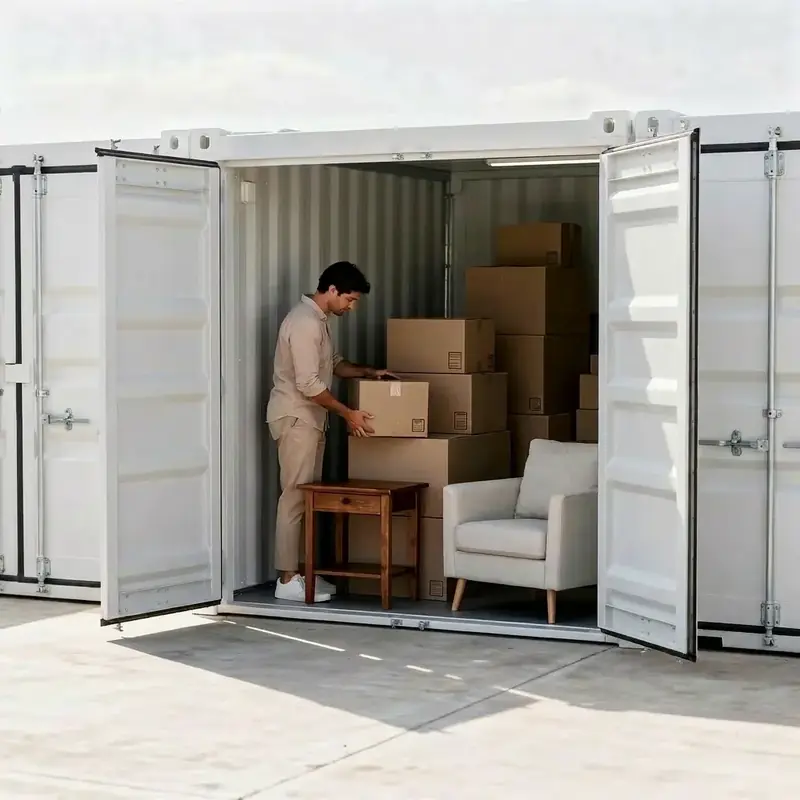
What it looks like in practice: CoStore.
CoStore operates self storage parks with storage containers for private and business customers. Customers book online and move in straight away. CoStore is looking for suitable commercial sites and partners for new locations.
* Price as advertised by CoStore; varies by location. Current prices at costore.de. CoStore initiated this platform. See the transparency note.
Container parks in brief.
Don't storage containers rust?
Storage containers made of Corten steel are built for ocean freight and are highly durable. Regular visual inspections, paint maintenance and a level, well-drained surface considerably extend their service life.
How do you prevent moisture in a storage container?
With ventilation grilles, interior lining or an anti-condensation coating where needed, and by advising tenants to store only dry items.
Can storage containers be stacked?
Technically, yes. However, tenants find ground-level units far more attractive. Stacked storage containers need stairs, walkways and must meet additional permit requirements.
Does a container park need on-site staff?
Not necessarily. Many parks are run digitally: online booking, electronic access, video surveillance and a service team that comes on site when needed.